Mom parked outside the grocery store at 2:15 PM… But the temperature gauge in her car read 89 degrees.
Steven watches through the grocery store window as Michael locks the Honda Civic. The afternoon sun beats down on the asphalt parking lot. The temperature display on the bank across the street reads 89 degrees.
Michael: I’ll be right back, Noah. Mommy just needs milk and bread.
The three-year-old nods from his car seat, clutching a small stuffed elephant. Michael cracks the windows an inch before heading toward the store entrance. The automatic doors slide shut behind her.
Steven pulls out his phone and checks the time. 2:15 PM. He’s been sitting in his truck for ten minutes, finishing paperwork from his shift at the fire station. Twenty-three years as a paramedic taught him to notice things others miss.
The child’s face appears in the rear window. Noah waves at a passing shopping cart. His cheeks look pink already.
Steven starts his engine but doesn’t leave. Something feels wrong. The car sits in direct sunlight with no shade. Those cracked windows won’t help much.
Five minutes pass. Noah’s waving becomes more frantic. He’s calling for his mother now, though Steven can’t hear the words through the glass.
Steven: This isn’t right.
He grabs his phone and steps out of his truck. The heat hits him immediately. If he’s uncomfortable in the shade, that car must be an oven.
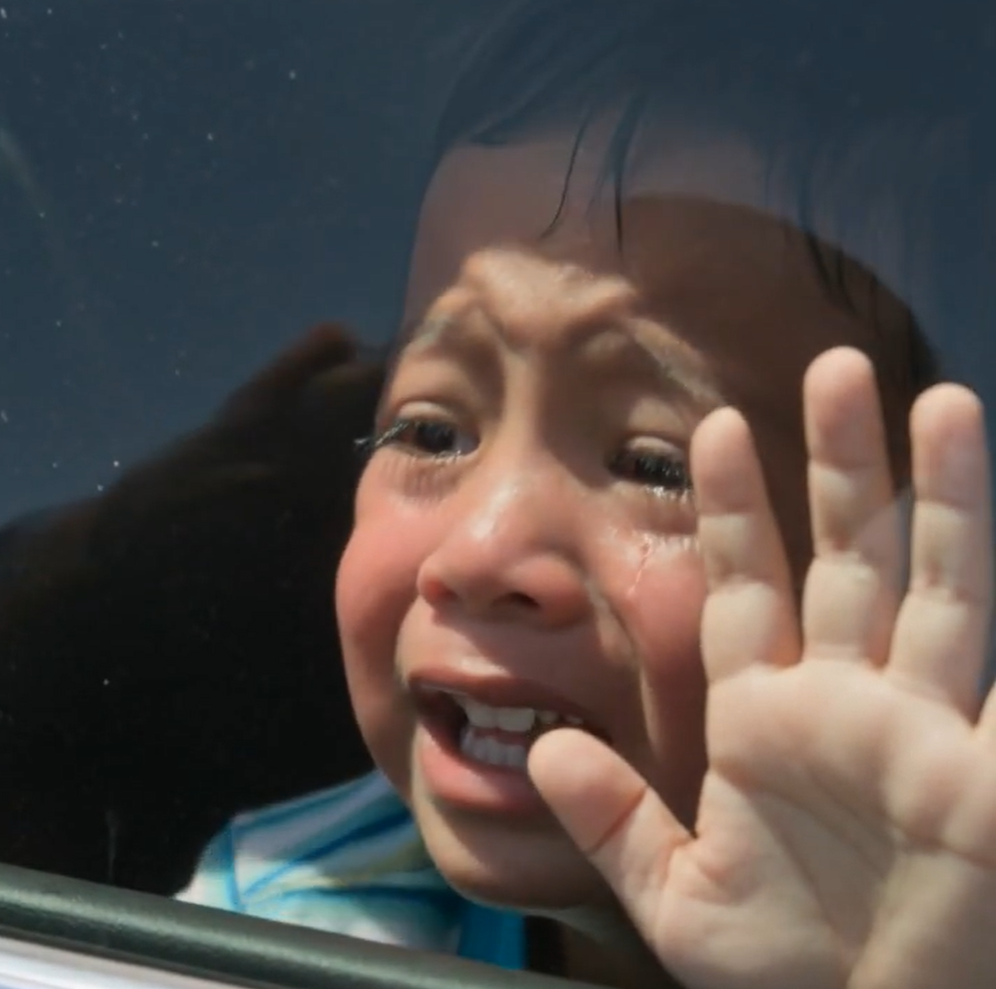
Noah’s crying now. His small hands press against the window. Steven approaches slowly, not wanting to frighten the child further.
Steven: Hey buddy, where’s your mom?
Noah points toward the store. Tears stream down his flushed face. Steven touches the car’s exterior. The metal burns his palm.
Steven dials 911 while walking around the vehicle. The doors are locked. Noah’s car seat faces away from the sun, but the interior temperature must be climbing fast.
Dispatcher: 911, what’s your emergency?
Steven: I have a child locked in a vehicle at Riverside Grocery. Temperature’s 89 degrees, car’s in direct sun. Kid’s showing signs of heat distress.
Dispatcher: Units are en route. Are you able to gain access?
Steven: Not without breaking glass. I’m a paramedic with County Fire. This situation is escalating quickly.
The dispatcher keeps Steven on the line while he monitors Noah. The child’s crying becomes weaker. His face is bright red now.
Steven: Noah, can you hear me? Your mom will be back soon.
But Noah’s head starts to droop. Steven knows the signs. Core temperature rising, dehydration setting in. A child’s body overheats five times faster than an adult’s.
Two police cruisers arrive within minutes. Officer Martinez steps out first, followed by Officer Brown. Steven waves them over.
Martinez: You the one who called this in?
Steven: Steven Hughes, County Fire paramedic. Child’s been in there about twelve minutes now. He’s showing heat exhaustion symptoms.
Brown approaches the passenger side. Noah lifts his head slightly but doesn’t respond to tapping on the window.
Brown: We need to get him out now.
Martinez: Do we have consent to break the window?
Steven: Medical emergency overrides property damage. That kid’s in danger.
Brown retrieves a window punch from his patrol car. Steven positions himself to catch any glass that might fall near Noah.
The rear passenger window shatters. Cool air rushes into the superheated vehicle. Brown reaches through and unlocks the doors.
Steven climbs into the backseat. Noah’s skin is hot and dry. His breathing is rapid and shallow.
Steven: Hey Noah, I’m Steven. I’m here to help you feel better.
He unbuckles the car seat and lifts the child out. Noah’s clothes are soaked with sweat. Steven carries him to the shade between the police cars.
Martinez: Ambulance is three minutes out.
Steven: Good. He needs IV fluids and cooling measures.
Noah’s eyes flutter open. Steven offers him small sips of water from a bottle Officer Brown retrieved from his patrol car.
Steven: That’s it, buddy. Just little sips.
Michael emerges from the store carrying two grocery bags. She stops when she sees the police cars surrounding her Honda. Her face goes white.
Michael: What’s happening? Where’s Noah?
Martinez: Ma’am, are you the mother of the child in the vehicle?
Michael: Yes, I was just getting milk. I was only gone a few minutes.
She drops the bags and rushes toward Steven, who’s still tending to Noah in the shade.
Michael: Is he okay? Noah, Mommy’s here.
Steven: He’s stable, but he was showing signs of heat exhaustion. Car interior temperature probably hit 110 degrees.
Michael: That’s impossible. I cracked the windows. I was only gone five minutes.
Martinez: Ma’am, witnesses report you entered the store at 2:15. It’s now 2:32.
Michael: That can’t be right. I just grabbed two items.
Brown shows her the store receipt from her discarded bags. The timestamp reads 2:19 PM.
Brown: Transaction took four minutes. But you were inside for seventeen minutes total.
Michael: I don’t understand. I went straight to the dairy section.
Steven continues monitoring Noah’s vital signs. The child’s breathing has improved, but his skin temperature remains elevated.
Steven: Ma’am, what happened in there?
Michael: I ran into my sister-in-law. We talked for a minute. Maybe two minutes.
Martinez: Seventeen minutes isn’t two minutes.
The ambulance arrives. Paramedics Scott and Taylor take over Noah’s care. Steven briefs them on the child’s condition and treatment so far.
Scott: Nice work getting him cooled down. Temperature’s 101.8, but he’s responsive.
Taylor: We’ll transport for observation. Dehydration and mild hyperthermia.
Michael: Can I ride with him?
Scott: After the officers finish their report.
Martinez pulls out his citation book. Michael’s face crumbles as she realizes the severity of the situation.
Martinez: Ma’am, I’m citing you for child endangerment. Leaving a minor unattended in a vehicle during dangerous weather conditions.
Michael: But I didn’t mean for this to happen. I lost track of time.
Brown: Intent doesn’t matter when a child’s life is at risk.
Steven approaches Michael while the officers complete their paperwork.
Steven: I want you to understand something. When I found Noah, his core temperature was rising toward dangerous levels. Another ten minutes, and we might have been looking at organ damage.
Michael: You’re exaggerating. Kids sit in cars all the time.
Steven: Not in 89-degree weather with minimal ventilation. I’ve responded to calls where children died in situations exactly like this.
The grocery store manager, Lopez, approaches the group. She’s been watching from the storefront.
Lopez: Officers, I have security footage if you need it.
Martinez: That would be helpful.
Lopez: The mother entered at 2:15, like you said. But she spent twelve minutes talking on her phone in the produce section. Then she shopped for another five minutes.
Michael: I wasn’t on my phone that long.
Lopez: The footage shows otherwise. You were on a video call with someone. Very animated conversation.
Brown: We’ll need a copy of that footage for the report.
Steven checks on Noah one more time before the ambulance departs. The child’s color has improved, and he’s asking for water.
Noah: Where’s my elephant?
Steven retrieves the stuffed animal from the car seat. Noah clutches it against his chest.
Steven: You’re going to be fine, buddy. The doctors just want to make sure you’re all better.
Taylor: Steven, thanks for the quick response. You probably saved this kid from serious complications.
The ambulance pulls away. Michael stands beside her damaged Honda, staring at the broken window.
Michael: How much will this cost to fix?
Martinez: That’s not your biggest concern right now. Child Protective Services will be conducting an investigation.
Michael: What does that mean?
Brown: They’ll determine if Noah is safe in your care. This citation goes to family court.
Steven approaches Michael one final time before leaving.
Steven: I’ve seen parents make mistakes. But seventeen minutes in a hot car isn’t a mistake—it’s negligence. That little boy could have died today.
Michael: You don’t understand. I’m a good mother. I work two jobs to support us.
Steven: Good mothers don’t forget their children in hot cars. Period.
He walks back to his truck. The parking lot has returned to normal activity, but Steven knows this incident will follow Michael and Noah for months.
Martinez hands Michael the citation and a business card.
Martinez: Court date is printed on the ticket. You’ll want to get a lawyer.
Michael: This will ruin everything. My job, my reputation.
Brown: You should have thought about that before leaving your son unattended.
The officers return to their patrol cars. Michael sits in her damaged Honda, staring at the citation. The grocery bags remain scattered on the asphalt.
Steven drives past on his way home. Through his rearview mirror, he sees Michael still sitting in her car, not moving.
His radio crackles with another call. House fire on Elm Street. Steven responds, but he can’t stop thinking about Noah’s frightened face pressed against that window.
Three hours later, Steven stops by the hospital during his dinner break. Noah is awake and coloring in a children’s book. A social worker sits nearby, taking notes.
Steven: Hey Noah, how are you feeling?
Noah: Better. The doctor gave me juice.
The social worker, Mitchell, introduces herself.
Mitchell: Are you the paramedic who found him?
Steven: Off-duty, but yes. How’s he doing medically?
Mitchell: Full recovery expected. But we’re keeping him overnight for observation.
Steven: And the mother?
Mitchell: She’s meeting with our family services coordinator. This isn’t her first incident with Child Protective Services.
Steven feels his stomach drop. Noah wasn’t Michael’s first endangerment case.
Mitchell: Two years ago, neighbors reported Noah wandering outside alone at night. Case was closed after mandatory parenting classes.
Steven: So this is a pattern.
Mitchell: Unfortunately, yes. We’re recommending supervised visitation until she completes additional safety training.
Noah looks up from his coloring book.
Noah: Is my mommy in trouble?
Mitchell: Your mommy needs to learn better ways to keep you safe.
Steven sits beside Noah’s bed.
Steven: You did good today, buddy. You stayed calm and helped the nice officers.
Noah: Will you visit me again?
Steven: I’ll check on you tomorrow.
The next morning, Steven returns to find Noah’s bed empty. Mitchell explains that he’s been placed with his grandmother temporarily while Michael attends court-mandated counseling.
Steven drives past the grocery store on his way to work. The parking space where Michael’s Honda sat is empty, but he can still see Noah’s small handprints on the window in his mind.
His radio dispatcher assigns him to a medical call. Elderly man with chest pains. Steven responds, knowing that every emergency call matters, but some stick with you longer than others.
The citation Michael received carries a maximum penalty of six months in jail and a $2,000 fine. But Steven knows the real consequence isn’t legal—it’s the trust that Noah lost in the person supposed to protect him most.
Two months later, Steven’s driving past the courthouse when he spots Michael on the steps. She looks thinner, tired. A woman beside her — older, same eyes — must be Noah’s grandmother.
He almost keeps driving.
But he pulls over.
Steven: How’d it go?
Michael: Twelve months probation. Mandatory counseling. Parenting classes.
She doesn’t sound defeated. She sounds like someone who slept badly for sixty nights and finally stopped arguing with herself about why.
Michael: I was on the phone with my sister. About losing the second job. I panicked and just… stopped thinking about anything else.
Steven: That’s the part that scares me. The stopping.
Michael: I know.
A pause.
Michael: He asks about you. The elephant man, he calls you.
Steven almost smiles.
Michael: I’m getting him back next week. Supervised, but — he’s coming home.
Steven nods and gets back in his truck. Nothing is fixed. The trust doesn’t just return because a judge signs a paper. But she’s still standing on those courthouse steps, not running from it.
That counts for something.
His radio crackles. Another call. He pulls back into traffic, and this time, when he passes the grocery store, he doesn’t look at the parking lot.