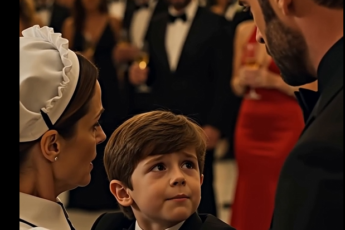
There were some losses the palace learned to speak of softly.
And then there were losses it learned never to name at all.
The queen’s daughter belonged to the second kind.
Years ago, when the kingdom was still bright with festivals and music, when the king laughed more easily and the queen still walked the gardens without that distant sadness in her eyes, the little princess had vanished.
Not died.
Vanished.
That was what made it unbearable.
No body had ever been found. No ransom had ever come. No enemy had ever claimed her. She had simply disappeared from the royal chapel courtyard one spring evening while bells were ringing and servants were changing the candles before prayer.
One moment she had been there, chasing the light across the stones with a silver locket bouncing against her chest.
The next—
nothing.
The kingdom searched for months.
Roads were sealed. Villages questioned. Forests combed through by soldiers and hunters. The king sent riders to the borders and gold to anyone who brought news.
But news never came.
Only silence.
And over time, silence hardens inside a palace. It settles into the walls, into the eyes of the servants, into the careful pauses before certain names. At first the queen fought it. She refused to mourn without proof. She refused to let the child’s chamber be emptied. She ordered fresh flowers placed there every week, as if a daughter could follow the scent of roses back home.
But years passed.
Hope became smaller.
More private.
More dangerous.
Eventually the king forbade the court from speaking of the princess in public. He said it was to protect the queen. In truth, it was because every mention of the girl reopened something in both of them that never healed properly.
Still, the queen never forgot the last thing she had seen.
That silver locket.
Small. Oval. Delicate. Made with a hidden clasp and a tiny engraving of a star on the back. It had belonged to her own mother before her, then to her daughter. On the day the child disappeared, the queen had fastened it around the girl’s neck herself.
No one else in the kingdom should have had it.
That was why, when the queen saw the poor girl near the fountain all those years later, her heart stopped before her mind did.
It was late afternoon. The chapel courtyard was quiet, painted in soft gold by the setting sun. The queen had come there alone except for a few guards behind her, hoping for a brief walk before the evening meal. It was one of the only places in the palace she still allowed herself to visit without ceremony.
The fountain was old, built long before her marriage, and beyond it stood a girl perhaps fourteen or fifteen years old in a faded dress that had once been blue. Her hair was tied poorly, as if no one had ever taught her to care for it properly. She looked thin but not weak, cautious but not afraid.
At first the queen barely looked at her.
Then sunlight struck the silver at the girl’s throat.
The queen froze.
“That locket…”
The words escaped her before she could stop them.
The girl’s hand rose instinctively to her neck. Her fingers curled protectively around the pendant.
“It was my mother’s,” she said quietly.
The queen took one step closer.
Then another.
The guards looked at one another, uncertain.
The queen’s eyes filled before she even knew why. It was not logic, not yet. It was memory recognizing something the body had carried too long to mistake.
“My daughter wore that,” the queen whispered. “The night she vanished.”
The girl’s face changed—not with recognition, but with fear.
She started to step back.
The queen saw it and softened her voice at once.
“No… wait.”
The girl hesitated.
The queen’s gaze remained locked on the locket. The star engraving was still there, faint but visible, right where it should have been.
“Where did your mother get it?” the queen asked.
The girl swallowed.
“She never said.”
“What was her name?”
The girl hesitated longer this time.
Then, very quietly, she answered.
“Mara.”
The name meant nothing to the guards.
It meant everything to the queen.
Because Mara had been the name of the maid assigned to the princess’s nursery the year she disappeared.
A maid who vanished the very same night.
The queen felt the world tilt.
“What else did your mother tell you?” she asked.
The girl looked down.
“That if anyone from the palace ever saw this…” She touched the locket again. “I was supposed to run.”
The queen’s breath caught.
“Why?”
“She said the palace was the last place I should trust.”
The words struck harder than open cruelty would have.
The queen stood perfectly still.
The guards were no longer merely confused. Now they were tense. One shifted his hand near his sword, not from threat, but from the feeling that something long buried had just begun to move.
The queen stepped closer still, slowly enough not to frighten the girl.
“Lift your sleeve,” she said softly.
The girl frowned.
“What?”
“Your left arm.”
For a moment the girl did not move. Then, perhaps because there was something in the queen’s face that felt older than command, she pulled her sleeve back.
There, near the wrist, was a tiny crescent-shaped birthmark.
The queen nearly fell.
When the princess had been born, the court physician had laughed gently and called it a moon-kiss. The queen had kissed that little mark a thousand times when her daughter was small.
Now it stared back at her from the arm of a stranger.
No.
Not a stranger.
The queen’s hand flew to her mouth.
The world blurred.
“My child…” she whispered.
The girl stepped back again, frightened now in earnest.
“No,” she said. “No, don’t say that.”
But the queen had already crossed the last distance between them.
Not touching.
Not yet.
Only looking.
Looking as if the years between then and now were made of glass and she could see through all of them at once.
“My daughter,” she said, and this time her voice broke completely.
The girl stared at her.
Torn between disbelief and something deeper. Something bone-level and ancient.
“No,” she repeated, but tears had already begun to rise in her own eyes, though she did not understand why.
The queen reached out slowly and touched the side of the girl’s face.
The girl flinched—
and then didn’t move.
The queen had imagined this moment so many times that she should have known what to say.
Instead, all she could do was breathe the same impossible truth over and over again.
“You’re alive. You’re alive.”
The girl began to cry.
Not because she believed.
Because part of her already did.
By nightfall, the entire palace knew.
Not officially. No proclamation had been made. But palaces live on whispers the way cities live on air, and this whisper was too large to keep inside walls.
The lost princess had returned.
Or perhaps a girl wearing her memories had.
The king did not believe it at first.
He listened to the queen’s trembling explanation, looked at the locket, examined the birthmark, heard the name Mara, and remained colder than stone.
“Many things can be faked,” he said.
The queen stared at him as if he had struck her.
“You think I would not know my own child?”
“I think grief makes saints and fools of all of us.”
The girl stood silent near the window while they argued around her as if she were an object both precious and suspicious.
At last the king turned to her directly.
“What do you remember?”
She lowered her eyes.
“Almost nothing from before I was six.”
The king’s face tightened.
“How convenient.”
The queen turned sharply. “Enough.”
But the girl spoke before either could say more.
“I remember bells,” she said quietly. “And roses in a room where I was not supposed to run.”
The queen went still.
No one in the kingdom outside the royal household knew that the princess’s chamber had always been filled with rose water because the child hated the smell of smoke from the torches.
The girl continued, haltingly, as if pulling things from deep water.
“I remember a song. A woman singing at night. Not my mother Mara. Someone else.”
The queen whispered the first line of the old lullaby before she even knew she was doing it.
The girl’s head lifted.
And then, softly, shakily, she sang the second line.
The king looked away.
Because even kings can only defend themselves from truth for so long before it begins to sound like love.
That night, for the first time in years, the queen entered the old nursery not to grieve—but to show it to someone.
The girl walked through the room slowly, touching nothing.
At the cabinet of toys, she stopped.
Then crossed to the far corner and knelt.
Behind a carved chest, wedged in a crack between stone and wood, she found a tiny ivory bird.
The queen had hidden it there once during a game when the princess was three.
No one else knew.
The queen sank to her knees and sobbed into the girl’s hands.
After that, even the king said nothing more against it.
Publicly, the palace announced only that a girl of great importance had returned under royal protection. The court was told details would come later. Quietly, physicians were called. Old servants questioned. Records opened. Everything pointed toward one truth.
The girl was indeed the lost princess.
And yet one question remained like poison under the skin:
Why had Mara run?
And why had she kept the child hidden for so many years?
The answer came three days later.
Mara had died the previous winter, the girl said. Fever, quick and merciless. Before dying, she had made the girl promise never to trust the palace, never reveal the locket, and never speak the old lullaby aloud.
“Why?” the queen asked again and again.
At first the girl only cried.
Then finally, on the fourth night, she told them.
Mara had not kidnapped the princess.
She had saved her.
The queen sat frozen as the story unfolded.
That spring evening years ago, Mara had overheard men speaking near the chapel corridor. Not strangers—men from inside the palace. Men under orders. She never heard the whole plan, only enough to understand that the child was meant to disappear before nightfall. Not for ransom. Not for politics outside the kingdom.
For succession.
The queen had recently given birth to a daughter, and the king’s council had grown divided. Some wanted the girl recognized as future heir if no son was born. Others feared that would weaken alliances already hanging by threads. According to Mara, one powerful lord had decided the problem should be removed before it could ever become law.
Mara saw the child alone near the fountain, understood too quickly what was coming, and made the desperate choice of a servant who knew no one would believe her over men with titles.
She took the girl and ran.
At first she meant only to hide her for a few days. Then word spread through the capital that the princess had vanished and the gates were sealed. Mara panicked. By the time she realized the court would assume her guilty, it was too late to come back.
So she fled farther.
Changed names.
Raised the girl as her own.
The queen listened in stunned silence.
The king stood by the fire, his face unreadable.
“Who were the men?” he asked at last.
The girl shook her head. “She never told me.”
The king nodded once, but something in his eyes darkened—not with anger alone, but with recognition.
Because there had indeed been such a lord then. One who had argued too fiercely, too often, that the kingdom could not survive uncertainty about the line of succession.
Lord Varen.
Dead these past seven years.
Which meant the queen’s daughter had not been hidden from enemies outside the palace.
She had been hidden from the palace itself.
That revelation changed everything.
The queen would not let the girl—her girl—out of sight. She slept in the adjacent chamber. She refused council meetings, banquets, even prayer unless the princess was within reach.
At first the girl accepted it with a quiet uncertainty.
Then, little by little, she softened.
She learned how to walk the corridors without shrinking from servants. She allowed the royal seamstresses to fit her new gowns, though she always looked embarrassed by fine things. She stood beside the queen in the gardens and listened to old stories about a life that had once been hers.
But something remained restless in her.
A distance.
A hesitation not caused by fear alone.
The queen felt it but did not know how to name it.
Until one evening, when they sat together in the old nursery, the girl asked:
“If I had never come back… would you still have waited?”
The queen turned to her.
“Every day of my life.”
The girl nodded slowly.
Then asked the question that truly mattered.
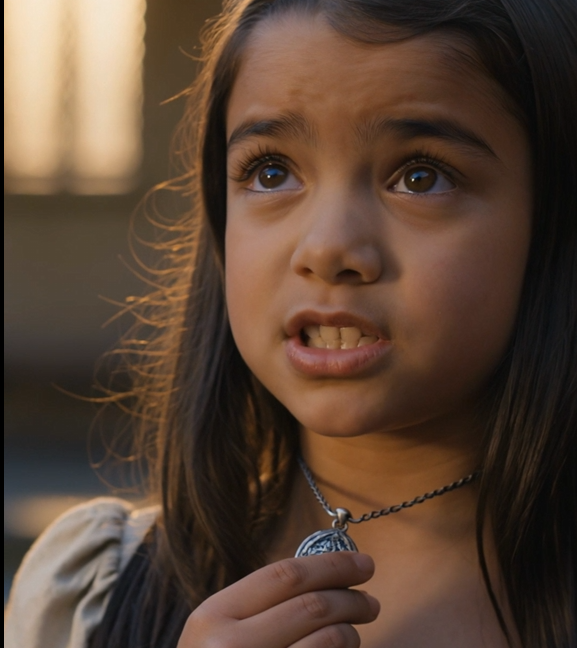
“And if Mara had never taken me… would I still be alive?”
The queen said nothing.
Because no mother can survive knowing the answer might be no.
The girl looked down at the locket in her hand.
“She lied to me,” she whispered. “But she also saved me.”
The queen’s eyes filled.
“Yes.”
The girl’s voice shook.
“So what am I supposed to do with that?”
The queen moved closer and placed a hand over hers.
“Love is not always innocent,” she said quietly. “Sometimes it arrives dressed as a crime.”
The girl began to cry then—not for the palace, not for the lost years, but for the woman who had stolen her and saved her in the same breath.
The queen held her through all of it.
And for the first time since the child returned, the girl leaned into her without hesitation.
It should have been the ending.
It should have been healing.
But palaces rarely allow grief to turn beautiful without asking for one more cruelty.
A week later, the king summoned the council and publicly recognized the girl as the lost princess before the full court.
Nobles bowed. Priests blessed her. The kingdom rejoiced.
And then, in the middle of it all, the princess spoke for the first time not as a lost child, but as someone who had seen both sides of truth.
“I will accept my name,” she said, “but not your forgetting.”
The hall went silent.
She turned to the queen.
Then to the king.
“Do not call Mara my kidnapper in your records.”
A murmur ran through the court.
The chancellor looked horrified.
The king’s jaw tightened.
“She took a princess from the crown,” he said.
“She took a child from men who served the crown,” the girl replied. “There is a difference.”
No one had ever spoken to the king that way in public and remained standing.
But the queen did not interrupt.
Because her daughter was right.
The king said nothing for a long moment.
Then, slowly, he nodded.
“Then how should she be remembered?”
The girl’s voice softened.
“As the woman who sinned… because good men were too late.”
No one in the court forgot those words.
And neither did the kingdom.
From that day forward, Mara’s name was written not among traitors, but in the hidden book of royal protections—the place reserved for those whose deeds were too complicated for statues, yet too noble for shame.
The princess never wore the crown in the years that followed without also wearing the silver locket.
When people asked why, she would smile sadly and say nothing.
But the queen knew.
Because in the end, the most unexpected part of all was not that a lost daughter returned.
It was that when she did, she brought back not only blood and memory—
but mercy for the woman who took her away.
And that was how the queen finally understood the strangest beauty of her own miracle:
She had lost a child to fear.
And received back a woman wise enough to forgive it.