The treasury doors were never opened without witnesses.
That was one of the oldest laws of the kingdom.
Three keys.
Three men.
Three seals.
The treasurer carried one key. The captain of the guard carried another. The third belonged only to the king. No matter how urgent the matter, no one entered the royal treasury alone. Not for gold. Not for jewels. And certainly not for the crown.
Because the crown was more than an object.
It was history shaped in gold.
Forged three generations earlier after the kingdom survived a civil war that nearly tore it apart, the royal crown had become the one thing no one dared touch—not because of its value, though it was priceless, but because people believed it carried the weight of the throne itself. Kings wore it at coronations, at treaties, at moments when the kingdom needed to see power given visible form.
And now it was gone.
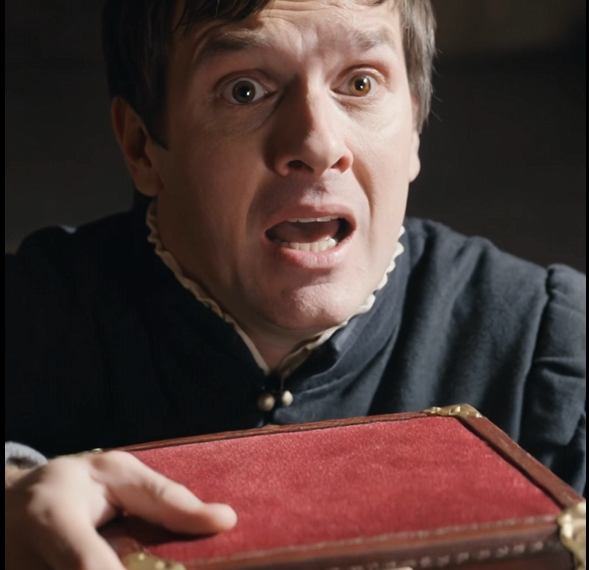
The treasurer had run all the way from the lower vaults to the king’s private council chamber, half breathless, half broken, clutching the large ceremonial case usually reserved for transporting the crown.
By the time he fell to his knees on the stone floor, everyone in the room knew something was wrong.
“Your Majesty…” he gasped. “The crown is gone.”
The king rose so quickly his chair scraped harshly against the floor behind him.
He was not wearing the crown—only a dark royal robe lined with fur, thrown over his shoulders for the late morning council. The absence of the crown on his head made the words somehow feel even worse, as if the void had already begun to spread from the treasury into the room itself.
“That chamber was sealed,” the king said.
His voice was not loud.
It did not need to be.
The treasurer lifted the large case with trembling hands.
“And it was replaced with this…”
He opened it.
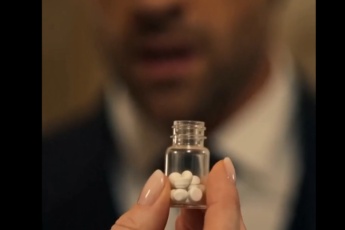
Inside the velvet-lined crown case, where gold and diamonds should have rested, lay something so small and ordinary that for a moment no one in the room understood what they were looking at.
A child’s wooden toy.
A carved horse.
Old. Worn. One of the wheels slightly uneven. The paint faded from years of use.
The king stared at it.
Not with confusion.
With recognition.
The room around him seemed to vanish.
Because he had seen that toy before.
Not in the treasury.
Not in years.
Not since the nursery.
His fingers tightened at his sides.
Everyone else saw only a poor, absurd object placed where a royal crown should have been.
But the king saw something else entirely.
He saw a small boy sitting on the floor near the western window of the palace nursery, pushing that same wooden horse over the stone tiles while laughing because one wheel clicked louder than the others.
He saw his son.
Prince Adrian.
Dead for twelve years.
Or so the kingdom believed.
The treasurer lowered his eyes, suddenly aware that whatever had been stolen from the treasury was no longer the most dangerous thing in the room.
The king stepped forward and reached into the case.
When he picked up the toy, his hand shook almost imperceptibly.
On the underside, carved so lightly it could be missed unless one knew where to look, were two letters.
A. V.
Adrian Varos.
The queen had carved them herself on the prince’s fifth birthday, smiling at how impatient the boy had been to play with the toy before the paint dried.
The king had buried that memory with everything else.
Or tried to.
“Who opened the treasury?” he asked.
The treasurer swallowed hard.
“No one without the three keys, Your Majesty. We checked the seals this morning. They were untouched.”
“That is impossible.”
“Yes,” the treasurer whispered. “That is what frightens me.”
The king turned toward the captain of the guard.
“Lock every gate.”
The captain bowed and moved at once.
“No one leaves the palace. No one enters. Search the lower vaults, the chapel halls, the servants’ quarters, the western towers—everything. I want every man questioned who stood watch near the treasury from last night until dawn.”
The room exploded into motion.
But the king remained still.
Still holding the toy.
That night, he ordered the case and the carved horse brought to his private chamber.
No council.
No priests.
No witnesses.
Only him.
He sat alone long after the candles had burned low, the large empty crown case open before him like a wound, the toy resting in the center of the velvet where the crown should have been.
If this was a threat, it was a strange one.
A thief would have left mockery. A rebel would have left a symbol. An enemy would have left a warning.
But this…
This was not meant for the kingdom.
It was meant for him.
By dawn, the first reports arrived.
Nothing broken. No secret tunnel found. No seal tampered with. No guard missing. No gold disturbed.
Only one thing unusual had been discovered.
The dust in the rear corridor behind the treasury, a corridor no one used except old servants and lamp boys, carried the faint impression of a child’s shoe.
Not a recent child’s shoe, either. Too small for any boy in service. Too narrow for work.
The king looked at the print record the captain had drawn and said nothing.
Then he ordered the old nursery reopened.
It had been locked for years.
No one entered it anymore. After the prince’s death, the queen had stopped going there, and after the queen herself died two winters later, the chamber remained untouched, preserved not by love but by grief no one wanted to disturb.
The king had not stepped inside since.
When the door finally opened, the smell of old wood and lavender drifted into the corridor.
Dust lay over everything.
The cradle.
The shelves.
The carved chest near the bed.
And yet some things looked… wrong.
Too clean.
The king moved slowly through the room, the captain of the guard behind him, silent.
At the far wall stood the prince’s toy cabinet.
Its doors were shut.
The king opened them.
Inside, the spaces where old toys once stood were mostly empty. A cloth soldier. A tin bell. A carved wolf missing one ear.
And one obvious gap in the dust-lined shelf where something small with four wheels had once rested.
The wooden horse.
The king stared at the empty place for a very long time.
Then he noticed something else.
Pinned inside the cabinet door, almost invisible beneath the shadow of the wood, was a strip of parchment.
Folded once.
No seal.
He pulled it free.
The writing was not childish. Nor was it elegant. It was controlled, careful, almost painfully deliberate.
A crown can be stolen.
A name cannot.
The captain stepped forward. “A message?”
The king folded the parchment at once and slipped it inside his sleeve.
“No,” he said. “Not for you.”
But in truth, he was not sure what it was.
Warning. Accusation. Invitation.
He did not sleep again that night.
By the second day, the palace had become a cage.
Servants whispered in corners. Nobles moved more carefully than usual, each afraid that theft from the treasury would lead to suspicion of something worse. Priests were called to bless the vaults. Locksmiths examined the doors. None could explain how the crown had vanished without force.
The king examined the toy again and again.
Every scratch.
Every dent.
Every faded line in the wood.
By evening he noticed what no one else had.
There was new carving beneath the old initials.
So faint it could only be seen when the candlelight hit from the side.
Three words:
Under father’s stone.
The king read them twice.
Then once more.
His heart slowed instead of quickening, which frightened him more than panic would have.
Because he knew exactly what the words meant.
In the palace chapel, beneath a black marble slab near the altar, lay the ceremonial tomb of his own father—the previous king. It was not a true burial place; the old king’s bones rested in the royal crypt below. But the stone itself had become a place where each new ruler prayed before major decisions.
The king had knelt there the morning Adrian was born.
And the night Adrian was declared dead.
He went to the chapel after midnight with only one man beside him—the captain of the guard, sworn by blood to silence.
The candles there were already lit.
That was the first impossible thing.
No priests had been ordered.
No night vigil scheduled.
Yet the candles burned in a half-circle around the stone.
The king approached slowly.
Then stopped.
Resting on the black marble slab, where no one should have dared place anything, sat the crown.
Whole. Untouched. Gleaming in candlelight.
For one brief moment, relief almost crushed him.
Then he saw what rested inside the crown.
Not jewels. Not poison. Not a blade.
A folded strip of linen.
The kind used years ago in royal nurseries for swaddling infants.
The king lifted it with shaking fingers and unfolded it.
Inside was another note.
If I wanted your throne, I would have taken more than the crown.
The captain went for his sword.
The king stopped him with one raised hand.
A sound had moved in the darkness beyond the chapel pillars.
A footstep.
Soft.
Measured.
The captain drew steel anyway and turned—
but the king had already seen the figure emerge.
A young man.
Perhaps seventeen. Perhaps eighteen.
Plain dark clothes. No insignia. No weapon visible. His face half in shadow, but his posture… his stillness… it struck something ancient and terrible inside the king.
The young man did not kneel.
Did not bow.
He only looked at the crown, then at the toy horse in the king’s hand.
“You kept it,” he said.
The king forgot how to breathe.
Because the voice was older than memory, yet somehow carried it.
The captain stepped forward, but again the king stopped him.
“Leave us,” the king said.
“Your Majesty—”
“Now.”
The captain hesitated only once, then withdrew beyond the chapel doors, though not far.
The king and the young man were alone among the candles and stone.
For several moments neither spoke.
At last the king whispered, “Adrian?”
The young man’s face changed almost imperceptibly.
Not with tenderness.
With pain.
“That was my name here,” he said.
The king closed his eyes.
Not because he doubted anymore.
Because he didn’t.
He saw the queen’s mouth in the young man’s face. His own father’s eyes. And in the set of the jaw, something that had been a child once and had learned too early not to trust what it loved.
“You’re alive,” the king said, and the words sounded pathetic compared to the years they had crossed.
“Yes.”
The king stepped forward.
Then stopped himself.
He did not know if he had the right to come closer.
“Who took you?”
The answer came without hesitation.
“You did.”
The chapel went silent except for candle hiss.
The king stared at him.
“No.”
The young man tilted his head slightly.
“No?” he repeated. “Then tell me, who signed the order that sent me away with Lord Sarven the night mother begged you not to trust him?”
The king went cold.
Lord Sarven.
A name he had not heard spoken aloud in over a decade.
Dead now. Officially from fever. Unofficially from a hunting fall arranged by men who feared what he knew after the prince vanished.
“I sent you to the coast for safety,” the king said quietly.
“You sent me with the man who sold me.”
The words did not strike like a shout.
They struck like truth always does—cleaner than mercy.
The king’s hand tightened around the toy horse until the wood pressed painfully into his palm.
He remembered that night now in unbearable detail.
Tension in the capital. Rumors of rebellion. The queen accusing Lord Sarven of treachery. Himself dismissing it as fear. Sarven suggesting the prince be moved secretly for a few days until unrest passed. The king agreeing because kings often mistake action for wisdom when what they really choose is convenience.
“I didn’t know,” he whispered.
Adrian’s expression did not soften.
“I know.”
And somehow that was worse.
Because forgiveness was not in it.
Only accuracy.
The king looked at the crown on the stone.
“You took it to bring me here.”
“Yes.”
“Why not reveal yourself openly?”
A faint, bitter smile touched Adrian’s mouth.
“Because men who disappear as children do not walk back into palaces safely. Not while the ones who profited from it still breathe.”
The king understood then.
This was not a simple return.
This was a test of the palace. Of the court. Of him.
“Who still knows?” he asked.
Adrian looked toward the chapel doors.
“Enough men to kill me before sunrise, if they realize who I am.”
The king’s voice hardened for the first time since entering the chapel.
“Name them.”
But Adrian shook his head.
“Not yet.”
“Why?”
“Because I didn’t come back to take your throne,” he said. “I came back to see whether you deserved to keep wearing what belongs above it.”
His gaze fell to the crown.
Then lifted again.
The king did not answer at once.
All the language of power—commands, threats, promises—felt useless here.
At last he asked the only thing he truly wanted to know.
“Why send the toy?”
For the first time, something like emotion cracked Adrian’s composure.
“Because I wanted to know,” he said quietly, “whether you would recognize me by the kingdom… or by what I was before it.”
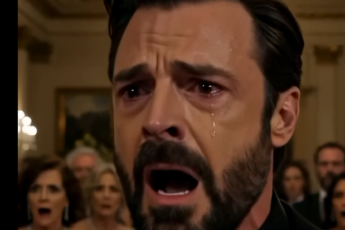
The king’s eyes filled before he could stop them.
He looked down at the horse, old and scarred and absurdly small against his hand.
“You were my son before you were my heir.”
Adrian’s jaw tightened.
“Then you loved me badly.”
The sentence landed between them and stayed there.
Because it was true.
Not false love.
Not absent love.
Failed love.
The kind that trusts the wrong men, signs the wrong orders, survives in regret instead of protection.
The king nodded once, as if accepting judgment from a court no crown could overrule.
“Yes,” he said.
The chapel candles moved in a sudden draft.
Outside, somewhere in the palace, a bell rang once.
Adrian stepped back into shadow.
“You need to leave with me,” the king said suddenly.
Adrian almost laughed.
“No.”
“They will kill you.”
“They tried.”
The king moved forward now despite himself.
“Then let me protect you now.”
That time Adrian did laugh, though softly.
The sound carried no cruelty, only exhausted disbelief.
“You still think this is about survival.”
He stepped toward the chapel’s side arch and paused.
The king felt panic rise—real panic, the kind not even battle had taught him well.
“If you leave now—”
Adrian turned back.
The candlelight caught his face fully for the first time.
He looked so much like the queen in that moment that the king nearly broke under it.
“I didn’t steal the crown,” Adrian said quietly. “I borrowed it.”
The king frowned.
“What?”
Adrian glanced at the marble stone where the crown rested.
“I wanted to see what you would reach for first. The kingdom… or your son.”
The king followed his gaze to the toy horse still in his own hand.
And understood.
He had carried the toy through two sleepless nights. Studied it. Remembered it. Followed it.
Not the crown.
The crown had brought the palace to panic.
The toy had brought him here.
When he looked up again, Adrian was already retreating into shadow.
“Wait,” the king said.
Adrian stopped.
The king’s voice dropped.
“Will you come back?”
A long silence.
Then the young man answered without turning.
“That depends on what kind of king remains by morning.”
And with that, he disappeared through the side arch into darkness so complete it seemed to swallow even the candlelight.
The king ran after him.
The corridor beyond the chapel was empty.
No guards saw him pass. No servants crossed his path. No secret door stood open.
Only cold stone, fading footsteps, and absence.
By dawn, the palace was no longer the same.
Three members of the king’s inner council had been arrested before sunrise. A hidden account book was found in Lord Sarven’s old estate. Payments, names, dates. Enough to expose the chain of men who had enriched themselves around the prince’s disappearance. Enough to show that the theft of the crown had not been the attack.
It had been the signal.
The king wore no crown when he summoned the court that morning.
He stood before them bareheaded, the royal toy horse hidden inside his robe, and began undoing in one day what cowardice and convenience had built across twelve years.
Some called it justice.
Some called it madness.
He knew better.
It was neither.
It was what remained after a father discovered that the most precious thing ever taken from him had returned only long enough to measure the man who lost it.
By sunset, the crown was restored to the treasury.
But from that day on, the king never looked at it the same way.
Because he understood at last the beautiful cruelty of what had happened:
The thief had not come for gold.
He had come to see whether the king would chase power…
or memory.
And in the silent darkness of the chapel, with the crown in one hand and a child’s broken toy in the other, the king had finally revealed the truth to the only witness who mattered.