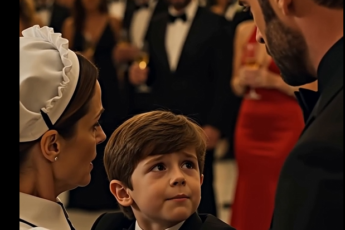
The kingdom of Veladrin had not seen a winter so cruel in living memory. Snow piled in drifts against the castle walls, the river froze solid, and in the narrow alleys of the lower city, beggars huddled around dying fires and prayed for spring. But within the great stone halls of King Alric’s keep, the cold was kept at bay by roaring hearths, mulled wine, and the comfortable indifference of men who had never gone hungry a day in their lives.
It was on such a night, with the wind howling against the leaded windows, that the king’s ring went missing.
The ring was no ordinary trinket. It had been forged for Alric’s great-grandfather, a warrior-king who had united the seven provinces under one crown. Set into its heavy gold band was a ruby the size of a robin’s egg, said to have been pulled from the heart of a mountain by dwarves long since vanished from the world. The kings of Veladrin wore it as a symbol of their right to rule. Without it, a king was merely a man in fine clothes.
Alric had last seen the ring that morning, resting on the carved oak table beside his washbasin. He had removed it to bathe — a small vanity, for the gold sometimes pinched his finger when his hands swelled in the cold — and when he reached for it again, his hand closed on empty wood. He searched the chamber himself. He summoned his manservant and had him searched. He tore apart the bedclothes, overturned the basin, demanded that every chambermaid who had passed through that morning be brought before him and questioned. Nothing. The ring was gone, as if it had melted into the stone of the floor.
By evening his rage had become a living thing, a coiled serpent in his chest. He stalked the corridors of the keep with his cloak billowing behind him, his face the color of the ruby itself, while servants flattened themselves against the walls to let him pass. He had decided, with the certainty of a man who needs someone to blame, that the thief could only be one of his ministers. They alone had business in his private wing. They alone had the cunning, and the greed, and the soft uncalloused hands of men who took what they had not earned.
He found them where he knew they would be — in the great dining hall, gathered around the long oak table for their evening meal. The fire was high, the candles were lit, and the smell of roasted venison and warm bread filled the air. Lord Branwell was telling some long story about a horse he had bought. Lord Ferris was laughing. Goblets clinked. None of them noticed the silence that had begun to spread from the doorway like spilled ink.

The doors burst open with a crash that shook dust from the rafters.
The king strode into the hall, and the ministers froze where they sat. Forks halted halfway to mouths. Lord Branwell’s story died in his throat. A goblet slipped from someone’s hand and rolled across the table, leaving a slow red trail of wine across the white cloth.
Alric reached the head of the table and slammed his fist down so hard that the candelabras rattled and a candle toppled, hissing out in a pool of wax. His grey beard quivered. His eyes had gone almost black.
“Who stole my ring?” he roared.
No one answered. No one breathed. Five faces, white as the snow piled outside, stared up at him in mute terror.
The king leaned forward over the table, his voice dropping to something far worse than a shout — a low, venomous whisper that carried into every corner of the hall.
“No one leaves this hall until someone confesses.”
He had the doors barred. He had guards posted at every window. He sat himself down at the head of the table with his sword across his knees and announced that he would wait — that they would all wait — until the truth crawled out of one of them like a worm from a wound. The ministers protested, swore their innocence, wept, prayed, accused one another. The hours dragged on. The fire burned low. The candles guttered. And still the king sat in furious silence, his hand resting on the pommel of his sword, watching them sweat.
He did not see the small figure that had slipped through the kitchen door three hours earlier, on the heels of a serving girl carrying out the empty trenchers. He did not see the boy crouch in the shadow of a stone pillar in the corridor outside, where the warmth of the great hall spilled out into the cold passage. He did not see what the boy held in his small, dirt-blackened hand.
The beggar was perhaps eleven years old, though hunger had made him look younger. His name, if anyone had ever bothered to ask, was Pip. He had lived in the alleys of the lower city for as long as he could remember, sleeping in doorways, stealing apples from market stalls, running errands for older boys in exchange for crusts of bread. He had a quick mind and quicker fingers, and that morning, when a kitchen maid had left the servants’ door propped open while she carried a basket of laundry, he had slipped inside in search of something — anything — to fill his belly.
He had not meant to climb so high. He had not meant to wander into the king’s own wing. But the keep was warm, and warmth was a thing he had not known in many weeks, and so he had drifted up staircases and through unguarded doors, following the heat the way a moth follows a flame. He had stepped into the king’s chamber while the king was bathing in the next room. He had heard the splash of water through the door. He had seen the gold ring on the oak table. And his small fingers had closed around it before his mind had even formed the thought to take it.
Now, crouched in the corridor outside the dining hall, with the king’s distant voice rising and falling in fury, Pip slowly opened his hand.
The ruby caught a single shaft of light from a wall sconce and threw a red flare across his dirty cheek. The gold gleamed warmer than any fire he had ever sat beside. He stared at it, and a slow smile crept across his face — not the smile of a wicked thief, but the smile of a child who had, for the first time in his life, held something beautiful.
He thought of what it could buy. Not jewels or silks or any of the things rich men hoarded — those were beyond his imagining. He thought of bread. He thought of a wool blanket. He thought of a pair of boots that fit, and a roof that did not leak, and a small fire that was his own. He thought of his sister, whom he had not seen in two winters, and whether he might find her again, and whether she might know him. He thought of all the small warm things that gold could become in the hands of someone who knew the price of being cold.
And then he thought of the king.
Pip was not a stupid boy. He had heard the shouting. He had crept close enough to the doors of the great hall to hear the king’s terrible whisper, the ministers’ weeping, the awful quiet of men condemned for a crime they had not committed. He understood, in the way that hungry children understand many things that better-fed men miss, that if he kept the ring, those five men in the hall would die. The king would not relent. Someone would be made to confess, whether they had stolen it or not. That was how the world worked, when you were a minister in a velvet robe and the king’s fist was on the table.
He looked down at the ring again. The ruby winked at him.
For a long moment, the boy and the gem regarded one another in the flickering corridor light. Then Pip’s smile changed — softened, became sadder, became the smile of someone who has just made a decision he will think about for the rest of his life.
He closed his fist around the ring. He stood up. And on small bare feet, soundless as snowfall, he walked toward the great hall.
The guards at the doors did not see him until he was almost upon them — a ragged shadow no taller than a sword. They moved to seize him, but Pip slipped between their legs the way he had slipped between market stalls a thousand times, and before anyone could shout he was inside the hall, standing on the long stone flags between the king and his ministers, with every eye in the room turned upon him.
King Alric rose slowly from his chair.
Pip walked the length of the hall. He did not run. He did not tremble. When he reached the head of the table, he opened his small dirty hand and laid the ring upon the white cloth, where it gleamed among the spilled wine like a drop of fresh blood.
“I found it, my lord,” he said, in a voice no louder than the guttering of a candle. “I think you must have dropped it.”
The hall was utterly silent. The ministers stared. The guards stared. The king stared down at the ring, and then at the boy, and then at the ring again.
He could have ordered Pip’s hands struck off. By the laws of Veladrin, that was the punishment for a thief who touched a king’s gold, and every man in the hall knew it, and every man in the hall — including Pip — expected it.
Instead, King Alric did something he had not done in a very long time. He looked, truly looked, at the small ragged child standing before him: at the bare feet blue with cold, at the ribs visible through the torn shirt, at the bright, frightened, unflinching eyes. He saw a boy who had walked into a room full of swords to save the lives of five men he did not know. He saw what the warm halls of his keep had let him forget — that beyond his walls there was a kingdom of people who had nothing, and that one of them, tonight, had been braver than any man at his table.
The king reached down and picked up the ring. He weighed it in his hand. He looked at the ruby that his great-grandfather had worn, and his grandfather, and his father, and at last he held it out to the boy.
“It seems,” he said slowly, “that I have a new minister.”
The hall erupted. The ministers gasped. The guards looked at one another. Pip’s mouth fell open. But King Alric did not laugh, and he did not take it back. He laid his heavy hand on the boy’s thin shoulder and turned him to face the long oak table, with its candlelight and its silver and its fine velvet chairs.
“You will sit,” he said. “You will eat. You will be washed and clothed and taught your letters. And one day, when you are grown, you will stand at this table in a robe of your own, and you will remind these men — and me — what it costs to forget the people beyond our walls.”
That night, for the first time in his life, Pip slept beneath a roof that did not leak, beside a fire that was his own.
And the ring of Veladrin, the great gold ring with its ruby like a drop of heart’s blood, sat once again upon the king’s hand — but it was, from that night on, a different king who wore it.