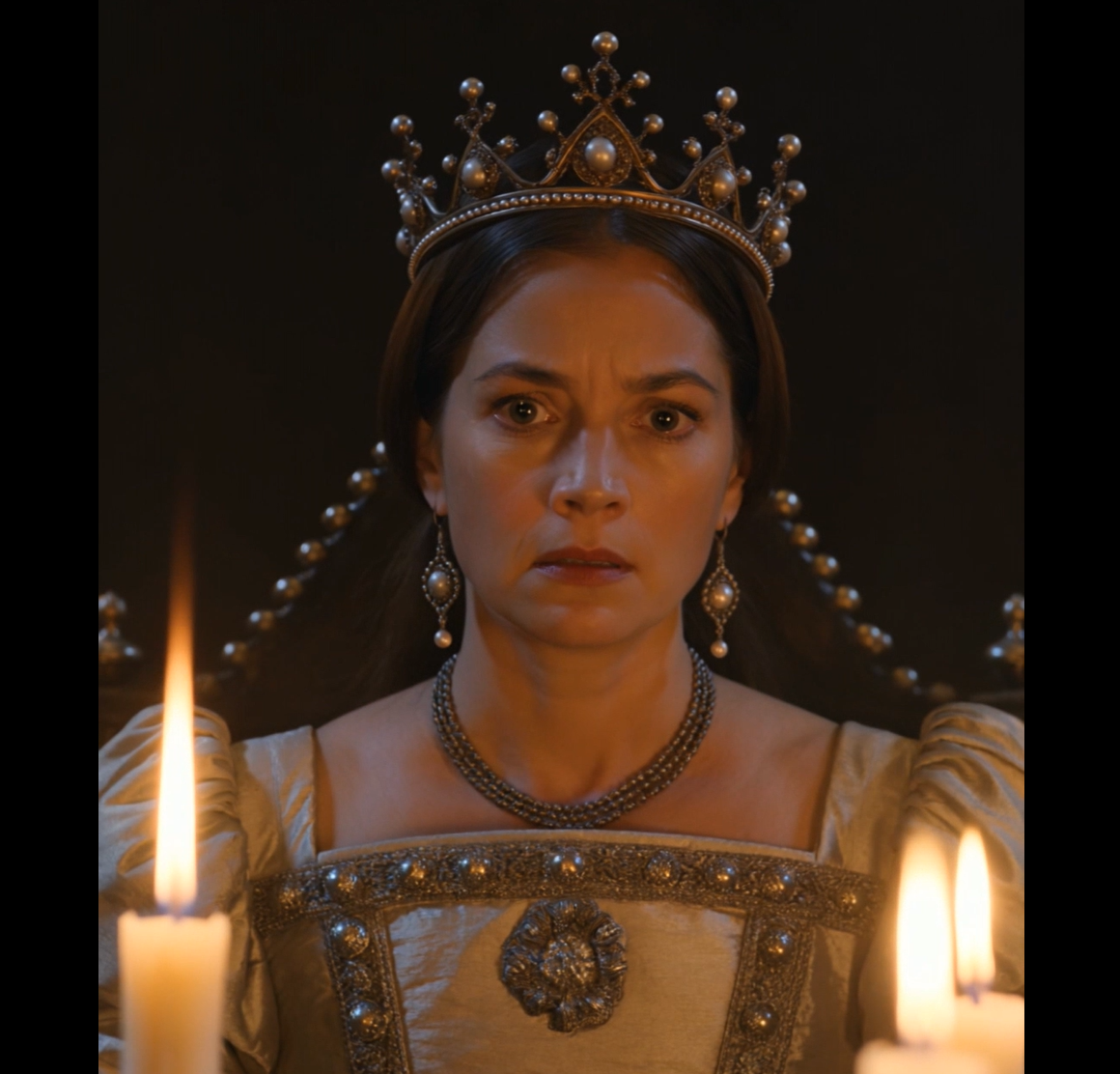
The queen never forgot the sound of the silver spoon falling.
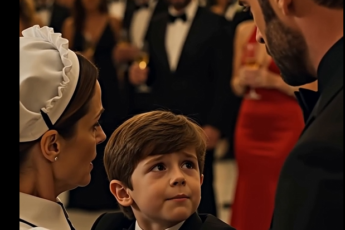
It had happened on an ordinary afternoon years earlier, in the nursery where the prince once ate beneath open windows and sunlight. He had been barely three years old, laughing over something only children understand, when he knocked the little spoon from his hand and it clattered across the floor. The maid had laughed, picked it up, kissed the top of his head, and told him a prince should not wage war on his porridge.
That maid’s name was Alina.
She had served the prince from the day he was born.
She bathed him, fed him, carried him through fevers, soothed him through storms, and knew the rhythm of his moods better than anyone except the queen herself. In a palace full of smiling ambition and polished lies, Alina had been one of the few people the queen trusted without caution.
Which was why, when the prince died, Alina was the last person anyone expected to be accused.
But palaces do not ask what is likely.
They ask what is useful.
The prince’s death had shattered the kingdom.
He was not merely the queen’s only son. He was the future of the crown, the promise stitched into every alliance, every plan, every anxious whisper of succession. His death came suddenly—too suddenly. One evening he was playing in the inner garden under guard, and by morning he was cold, pale, and gone.
The court physicians said poison.
The kingdom said murder.
And because kingdoms are often crueler when they are afraid, someone had to be blamed.
The cup had passed through many hands that night. Servants, tasters, wet nurses, guards. But only one person had remained near the child long enough for suspicion to feel convincing.
Alina.
She denied it with tears, with terror, with such heartbreak that even the queen wanted to believe her innocence. But the council pressed hard. The court demanded an answer. The king, already breaking under grief and political pressure, let the investigation move faster than truth.
By the end of the week, Alina was declared guilty.
She was not executed publicly. The queen, in one of the few mercies still left to her, forbade that. Instead, the maid was taken away quietly before dawn and said to have died in confinement of fever before sentence could be carried out.
The queen never saw her again.
For years, that was the official story.
And for years, the queen lived with two griefs braided together so tightly she could not untangle them.
The death of her son.
And the possibility that she had failed the one woman who might have died innocent.
Time did not heal either wound.
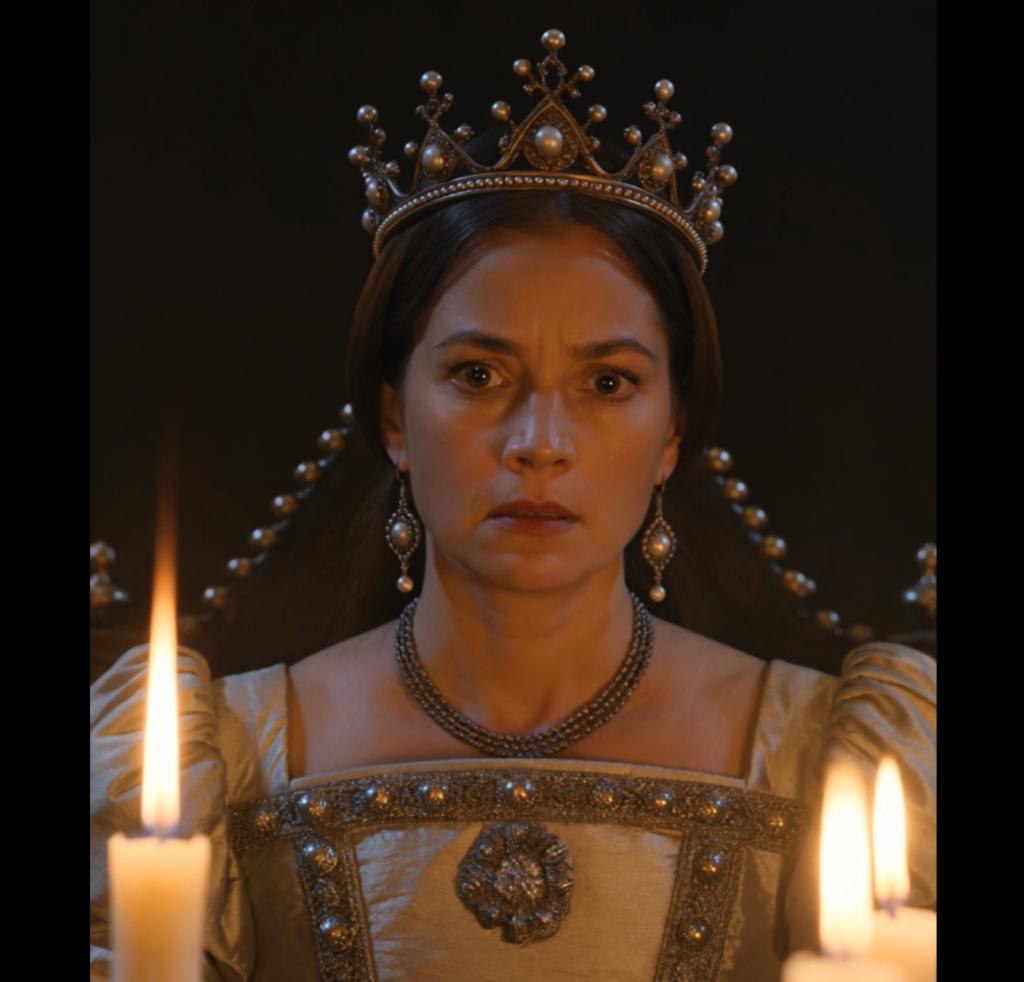
It merely taught the court to stop speaking of them.
Years passed. The queen grew quieter. The palace changed. New servants came, old ones vanished, and the nursery was sealed. The little silver spoon disappeared among the prince’s things, or so she thought. And because memory is both blessing and punishment, she sometimes dreamed of Alina not in chains or accusation, but laughing softly as she wiped porridge from the prince’s mouth and scolded him for throwing spoons like daggers.
Then one night, during a royal feast, the dead came back through the front doors in the shape of a child.
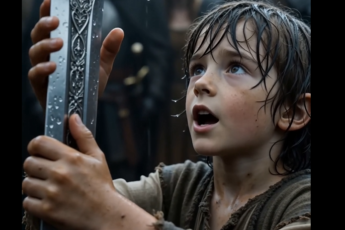
He was perhaps eight years old. Thin. Poorly dressed. Too pale for his age. His clothes were clean but old, patched carefully by hands that had nothing better to give. He walked into the banquet hall while the nobles were still eating, holding a small silver spoon in both hands.
The room went still.
The queen looked up first with irritation, then with confusion.
The child stopped in the center of the hall.
“My mother said this belongs to the queen.”
The spoon caught the torchlight.
And the queen felt her blood turn cold.
Because she knew it instantly.
Not by shape alone, though that would have been enough. It was a simple silver nursery spoon, small and delicate, engraved on the handle with a tiny crest made not for the court but for the royal nursery. The prince’s initials were still there, scratched faintly by time.
The queen rose slowly.
“Who is your mother?”
The boy looked directly at her.
“The maid they blamed for the prince’s death.”
The hall stopped breathing.
The queen stared at him.
“She died years ago,” she said.
The boy’s chin trembled, but he did not look away.
“She said that’s what you were supposed to believe.”
The queen ordered the hall cleared at once.
Within moments, the feast was abandoned, the torches suddenly too bright, the goblets untouched. Only the queen, two guards at the far doors, and the boy remained.
She stepped down from the high table.
“Tell me everything.”
The boy clutched the spoon tighter.
“My mother’s name was Alina,” he said. “She raised me outside the city. She was sick for a long time. Before she died, she made me promise to bring this only to you.”
The queen’s knees weakened.
The boy continued, haltingly at first, then with the steady rhythm of words repeated many times in fear of forgetting them.
Alina had not died in confinement.
She had escaped.
Or rather, she had been allowed to escape by someone inside the palace who knew she was innocent but not brave enough to save her openly. The night before she was supposed to be moved from her cell, a fire broke out in a storage corridor. In the confusion, a hooded priest came to her and said only one sentence:
If you want to live, you must disappear before dawn.
She obeyed.
He led her through an old servant tunnel beneath the chapel and out beyond the city wall. He gave her a little food, a few coins, and the silver spoon wrapped in linen.
Why the spoon?
Because Alina had begged for one thing before leaving.
Something from the prince’s nursery.
Something real.
Something to remind her, if she had to live hidden forever, that the child she loved had truly existed and that her love for him had not been erased by the lie told about her.
The priest gave her the spoon because it was small enough to hide.
And because perhaps he, too, understood that the difference between a criminal and a scapegoat can sometimes fit into a single hand.
For years Alina lived in a village far from the capital under another name. She worked where she could. She spoke little. She never married. And when the boy asked who his father was, she would only say, “A man I met after your life already began.”
The queen noticed that sentence.
Too careful. Too strange.
But she let the child continue.
Alina had always insisted that if anyone from the palace ever found them, they must run. Not because the crown would punish her again, but because the truth about the prince’s death had never truly died. It had only been buried.
Then, six months before her death, Alina began writing things down.
Names.
Dates.
Small details she had kept trapped inside memory because memory was the only place no guard could search.
The boy reached inside his tunic and brought out a folded cloth packet.
Inside were several pages, worn at the edges.
The queen unfolded the first and recognized Alina’s hand at once.
Not beautiful handwriting. Strong. Practical. Slightly slanted.
The first page was not an apology.
It was a record.
The prince had not been poisoned by a servant’s mistake or a maid’s ambition. He had been poisoned intentionally—but not by Alina.
The poison had been slipped not into the child’s cup, but into honey kept for him in a small silver jar sent each week from the royal kitchens. Alina had discovered something wrong too late, when the prince had already begun to weaken. She ran for help, but before she could reach the queen, two men from the household guard stopped her, dragged her aside, and searched her apron.
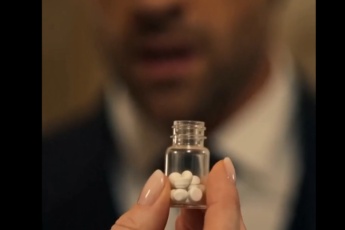
One of them placed a vial into her pocket.
The evidence had been prepared before the accusation.
The queen read in silence, her vision narrowing with every line.
Alina had seen one thing before they seized her.
Not the hand that poisoned the honey.
But the ring on that hand.
A black stone set in gold.
A ring worn only by members of the king’s inner council.
There had been six such rings in the palace at that time.
Only six men.
The queen read further.
A week before the prince’s death, she had overheard two nobles arguing near the west gallery. One said the kingdom could not survive if the child lived weak and sickly into manhood. The other said the queen would never accept another heir while her son breathed. Alina had not understood then. She did later.
The queen turned the next page.
There, at the bottom, was a name.
Lord Sarek.
For a moment, the room disappeared.
Because Lord Sarek had not only survived those years. He still lived.
He still advised the crown.
He still stood beside the king during winter councils, spoke softly, and bowed perfectly.
And he had once argued more fiercely than anyone that the prince’s death required swift justice and public certainty.
The queen lowered the pages slowly.
Her face had gone completely white.
The boy, frightened now by the silence, asked in a small voice, “Was she telling the truth?”
The queen looked at him.
And in that instant she saw what no one had prepared her for.
Not only Alina’s son.
But Alina’s faith.
Because a dying woman, broken by exile and years of fear, had still believed the queen might one day choose truth over peace.
“Yes,” the queen said softly. “She was.”
Before midnight, Lord Sarek was arrested in his chamber.
At first he denied everything.
Then he laughed.
Then, when faced with Alina’s written pages and the testimony of an old kitchen steward found half-blind in a monastery outside the capital, he changed again.
He became honest.
Which was somehow worse than denial.
Yes, he had ordered it.
Not because he hated the child.
Because he feared what the child represented.
The prince had been born weak, often ill, too delicate in the eyes of certain councilors who saw succession as a military problem rather than a human one. If the boy lived, the queen’s bloodline would remain secure. If he died, the council could press for another marriage alliance, another heir more “suitable” to the kingdom’s needs.
Sarek had decided the realm required a wound.
And Alina had simply been convenient enough to dress it in blame.
The queen listened without blinking.
Then she asked only one question.
“When he was dying… did he call for me?”
Sarek, who had survived every game of power until that night, lowered his eyes for the first time.
“Yes.”
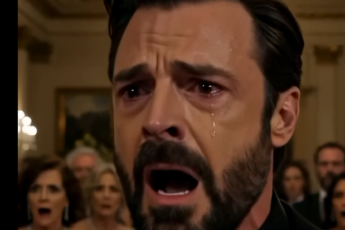
The queen left the chamber before anyone could see her break.
Lord Sarek was executed at dawn by royal order, though the proclamation named only treason against the crown. The kingdom was not told the whole truth. Kingdoms rarely are. But inside the palace, records were rewritten. Alina’s name was cleared. The charge against her was erased. Her place in the royal household restored in ink, if not in life.
The queen thought that would be the ending.
It was not.
Because when the boy was brought back to her the next evening, washed and fed and dressed in clean clothes for the first time in years, she noticed something that had been hidden beneath dirt and fear before.
His eyes.
Not Alina’s.
The shape of his face.
Not Alina’s.
And a small birthmark behind his ear.
One she had seen once before.
On her brother.
Long dead.
A detail the world would not have noticed.
But queens are trained to notice blood.
She asked the boy again about his father.
This time he told her what Alina had said in full.
“That he was a man who loved me without ever knowing my name.”
The queen went cold.
Because there had only been one man close enough, hidden enough, and doomed enough for such a sentence to be possible.
Her brother.
The prince’s uncle.
A man believed killed in battle the same year Alina was condemned.
Only now the timing changed shape in her mind.
He had not visited the palace during those last weeks because he was preparing for war.
He had visited the nursery because he adored the child.
He had spoken often with Alina in the corridors because she was the only servant who treated him like a man and not an ornament to the throne.
And then he had died before ever knowing she carried his son.
The queen looked at the boy standing in her chamber, holding the spoon that had survived accusation, exile, and grief.
Alina had not only returned to clear her name.
She had returned carrying blood the crown had already mourned once before.
The queen knelt in front of him.
“What did your mother call you?”
“Jon.”
She smiled through tears.
“Then Jon you are,” she whispered.
The boy frowned slightly.
“Am I in trouble?”
That was the moment her heart truly broke.
Because only a child raised in fear would ask such a thing after bringing truth back to a palace.
“No,” she said, pulling him gently into her arms. “You came home.”
And that was the strangest mercy of all.
The spoon the queen had thought belonged only to her dead son had not returned merely as evidence of betrayal.
It had returned carrying the last living piece of the family that betrayal had tried to erase.
Not her son.
But her blood.
Not the child she lost.
The child left behind by the woman they buried in lies.